The calendar was a battlefield. There were meetings from 9 AM to 6 PM, with lunch at his desk while emails piled up. Ankit had made it to the top. He held the title of senior manager, enjoyed the view from the corner office, and received a salary that made his parents happy. However, in the midst of status reports and stakeholder calls, Ankit lost his focus.
He made a crucial decision on Thursday afternoon. A change in the product worth ₹5 crore. In that moment, he had strongly fought for it. He knew it was wrong by Friday afternoon. Very, very incorrect. What a twist! He had made the decision too quickly, hadn’t gotten enough sleep, and was on his fourth espresso.
That weekend, he did something very different. He stopped for a while.
Not a break where you scroll around Instagram all weekend. A real break. He didn’t use his laptop. He took a walk. And he read a book that had nothing to do with work. On Monday morning, it was evident that the pivot was a mistake, and he knew exactly why.
You probably have a lot in common with Ankit if you’re reading this. Going from one meeting to the next. You feel like you’re getting things done right now, but you’re not sure whether you are. You may have heard of “deep work” and “focus time,” but your calendar has other plans.
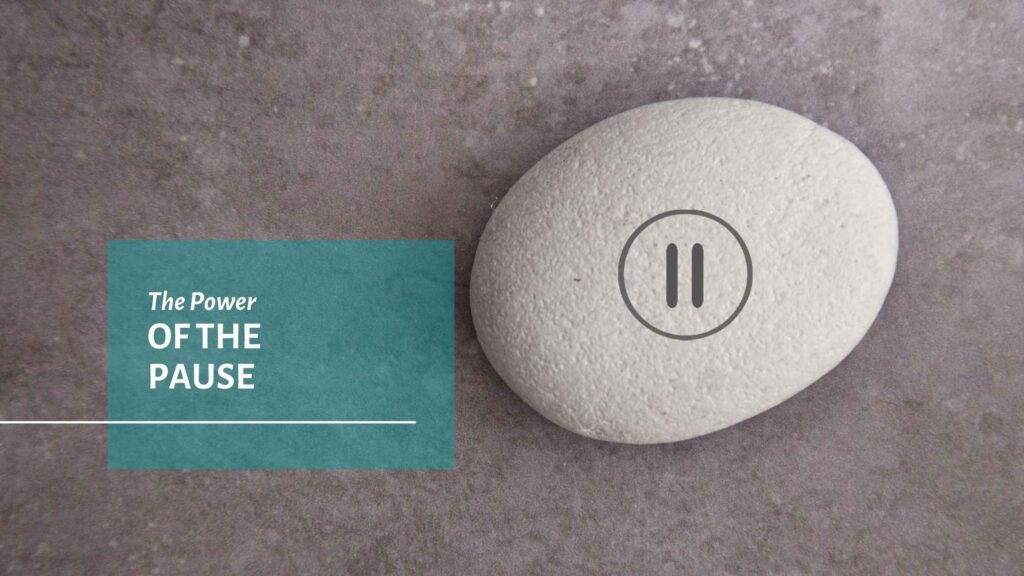
Here’s the secret that no one tells you: the power of the pause can get you more done. Not because of the break. Because of it.
The Productivity Paradox That Nobody Wants to Admit
Our culture is concerned with accomplishing more. More time. More meetings. And of course, more work.
It’s killing us.
The stats are terrible. In 2025, 82% of professionals are likely to burn out. In India, workforce participation has dropped to just 19%, the biggest drop in the world. What about executives? They are now having meetings for 23 hours a week, up from fewer than 10 hours in the 1960s.
More things to do. Less concentration. Worse choices.
This is where the power of the pause comes into play. Here’s a counterintuitive truth that many are reluctant to accept: taking breaks enhances your productivity rather than diminishing it.
Microsoft’s 2023 Work Trend Index reveals that 68% of professionals struggle to focus without interruptions. And 57% say they’re too busy to plan ahead. However, companies consistently increase their workload, schedule meetings, and prioritize urgent tasks.
What happened? The quality of decisions goes down. Creativity goes away. People become tired.
But most people don’t understand the mechanics behind this. Your brain doesn’t work all the time like a machine. It works in cycles. And the pause’s power comes from knowing those cycles and working with them instead of against them.
Why your brain demands pauses (but your calendar won’t let you)
Let’s take a moment to discuss neuroscience.
Your brain works in “ultradian rhythms,” which are natural cycles of high energy followed by low energy that happen every 90 minutes or so. This is how biology works. You can try to fight it, but you’ll lose.
Things change when you try to work past your natural peak performance window. Your brain gets worn out. Making decisions gets worse. The study is clear: people who are cognitively tired tend to be more cautious and make bad decisions. You think most effectively during the first 90 minutes. After that, your cognitive fatigue sets in.
This is what happens without breaks:
Mental weariness builds up.
It makes it harder to pay attention to some things, lowers cognitive control, and slows down the processing of high-level information. You’re still on the job. You’re just doing a lousy job.
You get tired of making decisions.
Your executive functioning is not as good by the time you have your fifth meeting of the day. You have a challenging time making choices. You either become passive (not making choices) or impulsive (making poor ones).
Attention residue builds up.
If you transfer tasks without taking a break, some of your attention stays on the last task. Cal Newport, a computer science professor at Georgetown, claims that this is “attention residue.” If it takes you 23 minutes to fully refocus after an interruption and you’re getting pinged all day, you’re never really focused.
This is why the power of the pause is more than just a good thing to have. It’s crucial.
Your brain isn’t made to stay focused for eight hours straight without a break. It’s built for cycles of intense attention and real repose.
The Power of the Pause: How It Works
What does a true pause really do?
It resets the way your brain works.
Taking short breaks lets your brain’s working memory clean up, which helps you think more clearly and process information faster. You really do think better after a break.
It stops you from getting tired of making decisions.
When you take a step back, you stop the chain of decisions that drains your executive resources. You’re not making decision number 47 of the day on an empty tank anymore.
It makes you more creative.
Most productivity experts don’t know this: stepping back from an issue can help you solve it. Your mind is still working on the problem even while you’re not aware of it. You don’t have an “aha!” moment while you’re working on it. It happens when you pause, in the shower, or on a walk.
It stops people from being burned out.
Companies that take strategic pauses report big benefits in the mental health of their workers. Taking short pauses throughout the day can help with anxiety and stress at work by providing mental time to regroup.
The data is consistent: taking breaks helps you be more productive by working with your body instead of against it.
The Plans That Really Work
Let’s get down to business. You can’t just say to your boss, “I’m taking a break because neuroscience.” You need a plan. These are the ones that work.
The Deep Work Block for 90 Minutes:
This course is the best. For 90 minutes, work hard on one task that is challenging for your brain. No email. No alerts. It’s just you and your work.
Take a break for 15 to 30 minutes after 90 minutes. Get up and move. Get some water. Give your thoughts a break.
What makes this work? Your brain works in cycles that last 90 minutes. Trying to focus beyond that will just make things worse, cause stress, and make you feel worn out. Stopping doesn’t mean you’re being lazy. You’re being smart.
Implementation: Set out 90 minutes on your calendar for your most important work. Take care of it like you would a meeting with a client. This moment is your most crucial encounter, and it’s with your mind.
The 52/17 Way
If 90 minutes seems too long, research shows that knowledge workers get the most done when they work hard for 52 minutes and then take a 17-minute break.
Why 52 and 17? Research on work-break intervals suggests that this ratio matches how our energy levels naturally change, which helps us stay focused and avoid mental tiredness. It’s shorter than the 90-minute model, but it still provides you time to really focus on your task.
Use a timer to put this schedule into action. 52 minutes of focused effort. Then 17 minutes of real rest (not checking email, just resting). Here’s the 52/17 rule explained in depth.
The Pomodoro Method (For Those Who Don’t Believe)
Start here if you’ve never taken structured breaks before. Twenty-five minutes of effort with a clear goal. Five minutes off. After four cycles, take a break for 15 to 30 minutes.
It sounds easy. It works because it takes away the need to contemplate it. You don’t have to think about whether or not to take a break; you’re following the system.
Strategic “Wedges” Between Meetings
This idea comes from Juliet Funt, and it’s especially helpful if you have many meetings during the day.
Take 5 to 10 minutes between meetings or tasks on purpose. That’s all. Five to 10 minutes. Avoid checking your email, as it could undermine the purpose of the exercise. To really start over.
Take a few minutes to practice deep breathing. Take a stroll to get some fresh air. It involves taking a break from watching television. These short breaks interrupt the cycle of constant reacting and provide your mind with an opportunity to reset before your next activity.
The magic is not in the break itself. It stops “hallucinated urgency,” which is the wrong idea that everything needs to be done right away. It allows your brain room to figure out what is critical.
Deep Work Batching
Put related jobs together and put them into protected time chunks. Instead of jumping between email, calls, and strategic work all day (which makes it hard to focus), set aside time in the morning for email, in the afternoon for calls, and in the early morning for deep work.
Less moving between tasks means less leftover attention. Better focus comes from less attention residue. Improved decisions come from improved focus.
The Power of the Pause in Real Life
Let’s make this happen.
Think about a normal Tuesday for you. You have one meeting after another. You don’t eat lunch. Many emails are coming in. Someone asks you for a strategic suggestion by 3 PM. You make a quick choice, and two weeks later you have to fix the mess.
Now picture Tuesday with the power of the pause:
- 9:00–10:30 AM: Time to focus on your most critical assignment. Turn off the phone. Closed email.
- 10:30 to 10:45 AM: Real break. Water. Stretch. Reset.
- 10:45 AM to 12:30 PM: Meetings (when your mind is still clear).
- Lunch is from 12:30 to 1:15 PM. Really far from your workstation.
- Second deep work block from 1:15 to 2:45 PM.
- 2:45–3 PM: A planned break. Go for a walk. Take a breath.
- From 3 PM on: emails, calls, and tactical work.
The advice you need at 3 PM? You previously thought about it while you were working diligently. Your brain is clear. Your choice is better.
This isn’t just a theory. Companies that take planned breaks say their productivity goes up by 13% to 30%, especially for tasks that require a lot of mental effort. The number of mistakes goes down by as much as 33%.
The power of the pause isn’t wasted time. It’s optimized time.
The Real Price of Not Pausing
Let me tell you what occurs when companies don’t want to use the power of the pause.
The quality of decisions goes down. Burnout speeds up. The best individuals go away.
82% of professionals are at risk of burnout in 2025. How much does it cost? Burnout costs the world $322 billion a year in lost productivity. In India, the issue is particularly severe, with only 19% of workers demonstrating engagement.
What is causing this? Always reacting. There is insufficient time for reflection or contemplation. No breaks. There are just meetings and emails, and everything seems to need quick attention.
The amusing thing is that these groups think they’re getting things done. No, they’re not. These groups are making poorer decisions while overworking their most talented employees.
What they’re missing is that the power of the pause lets you make better strategic decisions, prevent burnout, and get real work done.
Companies that preserve deep work and plan breaks see:
- Making better choices. After a break, your brain works better.
- Better retention. Employees are happier at work when they can take strategic breaks on their own.
- More new ideas. You need time to brainstorm creatively. You can’t come up with new ideas if you’re always reacting.
- Fewer mistakes. When your brain gets worn out, you make mistakes. They stop them.
The companies that do the best in 2025 aren’t the ones that work the most hours. They are the ones that know how powerful the pause is and make it a part of their culture.
How to Do This in Real Life (Even if Your Culture Says No)
The challenging part is that your company probably doesn’t appreciate breaks. It values being visible, responsive, and always doing something.
One discussion can change that culture. Another thing is to protect your practice. Begin with yourself.
1: Keep one block of 90 minutes safe.
Next week, set aside 90 minutes for your most important work. Think of it like a meeting with a big client that you can’t miss. This meeting is crucial due to its impact on your own performance.
2: Plan breaks between meetings
Don’t plan meetings one after the other. Add 10-minute breaks. Go outside. Take a breath.
3: Shut down email while you work
Email is detrimental for staying focused. It makes things seem more urgent than they are. Send out many emails at certain times, like 11 AM and 3 PM.
Step 4: Tell your team about the changes
Let them know you’re conserving your time to focus. They’ll want to do the same when they realize how much better your thinking is.
Step 5: Make it bigger
Once you learn to use the pause in your work, teach your coworkers. Show the results: better choices, fewer errors, and more involvement.
The power of the pause spreads by example, not rules.
The Real Truth About Pauses
This is what business schools don’t teach you.
When you take breaks, you’re not only trying to be more productive. You’re getting your humanity back.
The never-ending grind, 70-hour workweeks, meetings when you’re not really listening, and decisions made on fumes; costs more than just being productive. It costs you your clarity. Your connections. It impacts your self-perception.
The power of the pause gives you time to ponder again. This time allows you to reflect on the situation. To question yourself, “Is this the life I want?” Do I really believe in this choice? Am I doing something important or just keeping myself busy?
Usually, burnout isn’t caused by working too hard. It comes from work that doesn’t mean anything. Work that doesn’t match up with what you really care about. But you can’t get that insight when you’re always reacting.
Pauses make it easier to see things clearly.
Your Plan of Action
This week:
- Set aside 90 minutes for your most crucial tasks.
- Put in a 10-minute strategic break between meetings.
- Send a batch of emails at two specific times.
This month:
- Every day, use the Pomodoro Technique or the 52/17 technique.
- Pay attention to how your decisions become better.
- Offer one coworker the power of the pause.
This quarter:
- Look over your calendar. How much is reactive? How much is proactive?
- Set aside three 90-minute blocks of intensive work time each week.
- Additionally, instruct your staff to safeguard their focused work time.
It’s not a luxury to have the power of the pause. It’s the basis of serious work.
The True Productivity Revolution
The magic of the pause is clear: taking a break makes you more productive. Not because of the break. Because of it.
We’re taught that productivity is all about how much work we do. Your productivity is measured by the quantity of emails you send. How many meetings do you go to? How many hours do you work?
That isn’t productive. That’s something to do.
The quality of your thoughts is what makes you truly productive. How clear your choices are. The impact of your efforts is what truly matters. How long your work will last.
That doesn’t happen when you’re always reacting.
It happens when you stop. This phenomenon occurs during the 90-minute window when you engage in serious contemplation. In the ten minutes between meetings, your nervous system restarts. When you take a step back from an issue and let your thoughts work on it without you.
This is the real productivity revolution that will happen in 2025: moving away from the culture of hustle and toward productivity that is planned. You will transition from being busy to making a difference.
Your competitive edge is the power of the pause. Use it.
Want to experience the power of the pause firsthand? Join our 2-day Strategic Pause retreat designed to help you design 2026. Unplug from the grind, reset your nervous system, and return with clarity on what truly matters. Limited to 12 participants.
Aarambh: The New Beginning: Book by Dec 31 for early-bird pricing.